


THE AMITYVILLE HORROR (1979): The True Story Behind the Traditional Film


Launched in the summertime of 1979, The Amityville Horror stands as probably the most commercially profitable and culturally influential supernatural horror movies of the late twentieth century. Directed by Stuart Rosenberg and tailored by Sandor Stern from Jay Anson’s bestselling 1977 novel, the movie capitalized on a hungry public’s fascination with the occult, true crime, and issues that go bump within the evening.
Regardless of weathering mixed-to-negative critiques from modern critics, the movie struck a primal nerve with audiences, cementing its standing as a foundational textual content for the trendy haunted home subgenre.

1. Premise and Plot Abstract
The movie opens with the stark, brutal actuality that birthed the legend: in November 1974, Ronald DeFeo Jr. shot and killed six members of his household inside their Dutch Colonial dwelling at 112 Ocean Avenue in Amityville, New York.
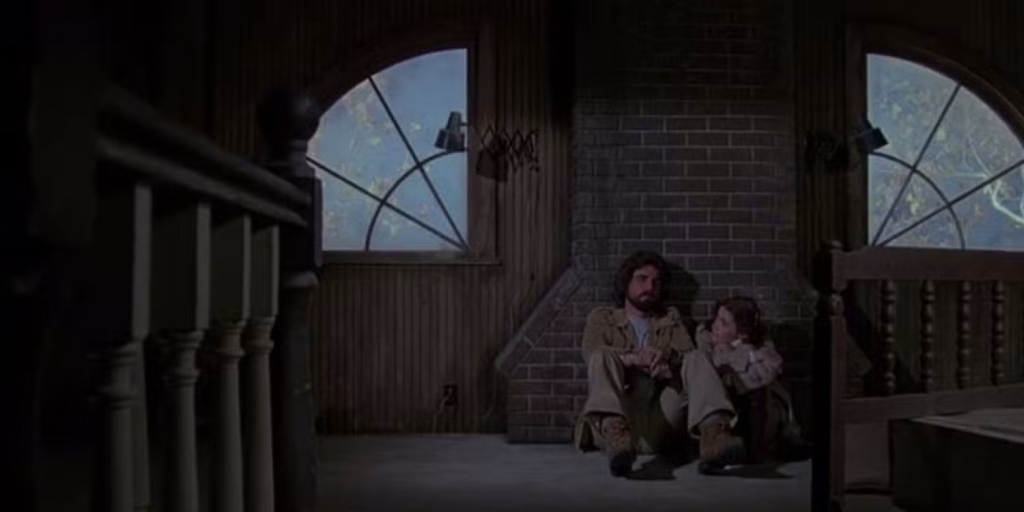
One 12 months later, a younger, working-class couple, George and Kathy Lutz (performed by James Brolin and Margot Kidder), purchase the idyllic waterfront home at a discount worth, totally conscious of its grim historical past. They transfer in with Kathy’s three youngsters, hoping for a contemporary begin.
Nearly instantly, the home begins to exert a malevolent affect over the household:
- The Descent of George: George turns into more and more unhinged, obsessive, and chilly. He neglects his enterprise, spends hours chopping wooden within the freezing chilly, and takes on a putting bodily resemblance to the portraits of the assassin.
- Supernatural Disturbances: The house is tormented by swarms of flies, slime oozing from the partitions, mysterious slamming doorways, hidden rooms, and demonic entities manifest in bodily kinds—most famously, glowing crimson eyes peering by means of an upstairs window at evening.
- The Church’s Defeat: A neighborhood priest, Father Delaney (Rod Steiger), makes an attempt to bless the home, however is violently rebuffed by unseen demonic forces, resulting in his psychological and bodily breakdown.
As the phobia peaks—with crucifixes turning the wrong way up and the home seemingly making an attempt to swallow them entire—the Lutzes flee in terror, abandoning all their possessions.

2. Key Manufacturing Particulars
- Solid & Crew: James Brolin underwent a stark bodily transformation for the position, rising a ragged beard and losing a few pounds to map George’s psychological decay. Margot Kidder—contemporary off her stardom in Superman (1978)—introduced a grounded, frantic terror to Kathy. Veteran actor Rod Steiger delivered a famously intense, sweat-drenched efficiency because the tormented clergyman.
- The Iconic Home: Although the occasions allegedly passed off in Amityville, New York, the precise home used for exterior photographs was positioned in Toms River, New Jersey. The enduring Dutch Colonial “eye” home windows needed to be quickly added to the construction for filming and later altered after manufacturing to discourage vacationers.
- Lalo Schifrin’s Rating: The movie’s eerie, chilling lullaby-esque theme music, “The Amityville Horror,” earned an Academy Award nomination for Finest Authentic Rating, serving to to sew the film into the cultural cloth.

3. Field Workplace Reception and Cultural Legacy
Whereas main critics like Roger Ebert panned the movie as “dreary and terminally miserable” with an “invisible unhealthy man”, moviegoers disagreed fully. Distributed by American Worldwide Photos (AIP), The Amityville Horror turned an enormous blockbuster.
Key Success Metrics
- Manufacturing Finances: ~$4.7 million
- Field Workplace Gross: Over $86 million domestically in its preliminary run (translating to lots of of thousands and thousands adjusted for inflation).
- Historic Standing: For a short interval, it held the report because the highest-grossing impartial movie of all time earlier than being overtaken later that 12 months by John Carpenter’s Halloween.

4. The “True Story” Debate
A lot of the movie’s preliminary advertising and marketing leaned closely on the declare that it was “based mostly on a real story”. George and Kathy Lutz maintained that they skilled real demonic phenomena throughout their 28 days in the home.
Nevertheless, subsequent investigations—together with revelations that the Lutz household’s lawyer, William Weber, helped concoct parts of the haunting alongside the household over a number of bottles of wine—forged extreme doubt on the narrative. Regardless of being broadly debunked as a hoax or an exaggerated money seize, the blurring strains between “truth” and “fiction” gave the movie a harmful, forbidden attract that heightened its field workplace enchantment in 1979.
5. Enduring Affect
The unique movie spawned an unwieldy multimedia franchise, together with direct sequels (Amityville II: The Possession), 3D entries, a 2005 Hollywood remake starring Ryan Reynolds, and dozens of low-budget, unrelated straight-to-video options that utilized the “Amityville” title as a result of its lack of copyright safety.
At the moment, Stuart Rosenberg’s 1979 function stays a touchstone of Seventies horror. It tapped into anxieties relating to home areas, financial vulnerability, and the fragility of the American nuclear household—proving that generally, the scariest place on Earth is the mortgage you simply signed.
To learn the remainder of my Monstrous Film Evaluations, click on HERE! So as to add this film to your movie assortment, click on on the Blu-ray cowl under.

The put up THE AMITYVILLE HORROR (1979): The True Story Behind the Traditional Film appeared first on David's Basement of the Weird.